

MELBOURNE – Australia will be hosting ASEAN leaders in Melbourne this Tuesday for a special summit aimed at cementing its role as a key partner for Southeast Asia, as the two sides mark the 50th anniversary of dialogue partnership.
It is the biggest diplomatic gathering in Australia since 2018, when former prime minister Malcolm Turnbull held a similar gathering with leaders at the last ASEAN-Australia special summit in Sydney.
Since then Australia has signed a strategic comprehensive partnership with ASEAN, launched a new economic strategy to deepen business and trade ties, and appointed a special envoy to lead the engagement.
Minister for Trade and Tourism Don Farrell said there is plenty of untapped potential in the trade relationship, admitting that Australia had been too reliant on trade with China in the past.
“Our trade with Southeast Asia is underdone and we need to do better,” he said during an ASEAN media roundtable held in Canberra recently.
“We are part of the region, but we don’t do enough trade. The trade with China, for instance, last year was $300 billion. Our trade with Southeast Asia in total was only $187 billion… We think that we should be able to double that by the end of the decade by broadening and diversifying our trading relationships.”
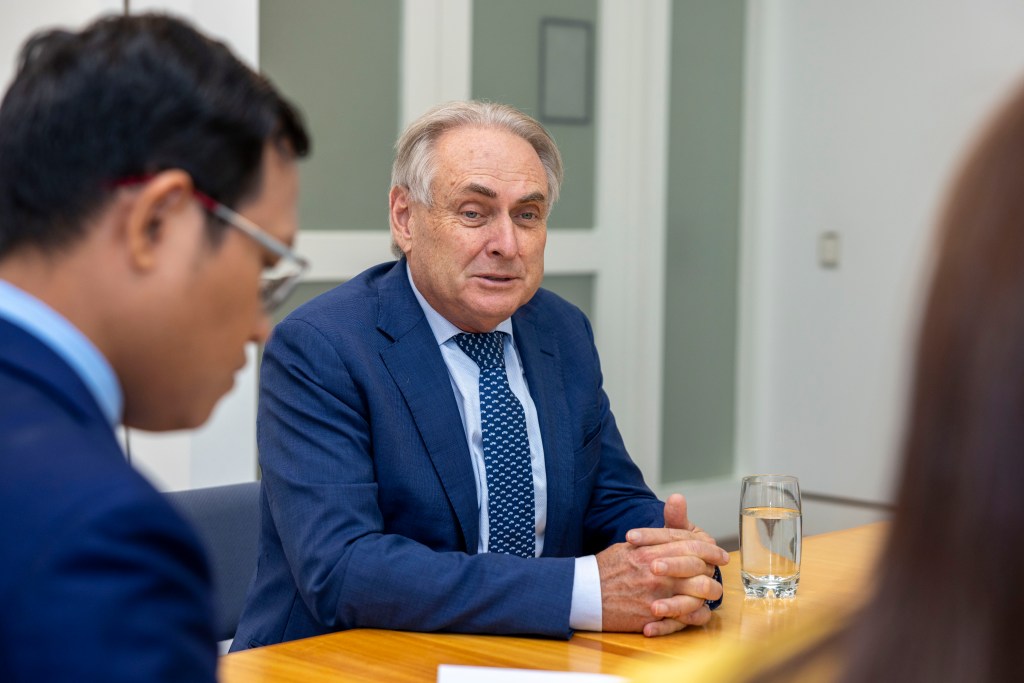
Farrell added that there needs to be more concerted effort to facilitate business and investment in ASEAN, a region set to be the world’s fourth-largest economy by 2040, after the United States, China and India.
“Our strategy talks about sending Australians into the region, boots on the ground, to try and build those relationships, to get the contracts that we need to increase our trading relationship.”
“At the summit, we’re bringing together 100 CEOs in Melbourne – a mixture of Southeast Asian and Australian CEOs. We are hopeful that that will create some links that will build those trading relationships.”
‘Green energy superpower’
Much has been made of Australia’s ambition to be a “green energy superpower” — thanks to vast solar and wind resources and hydrogen manufacturing capabilities — the country aims to be be a major renewable exporter by 2030.
Chris Bowen, Australia’s minister for climate change and energy, said that as Southeast Asia undergoes rapid economic growth, its energy demand will rise in tandem.
“The International Renewable Energy Agency say all of Southeast Asia’s energy growth needs could be catered for by renewables, but only if we build them and invest. Otherwise, it’ll be fired by coal and gas and emissions,” he said.
“Scaling up the investment needed in renewables and clean energy technology will require a substantial injection of private capital and investment, including from international partners and global companies.”
Southeast Asia, according to one estimate by the Asian Development Bank, requires US$210 billion annually through 2030 for climate infrastructure investment.
Bowen said Australia has already set up multi-million dollar initiatives to support Indonesia and Vietnam in adopting clean energy and attracting private climate financing.
‘Respect for rules and norms’
Since coming to power, the Albanese government has reiterated how Australia’s prosperity and security is intimately linked to Southeast Asia.
“Australia is not the biggest power you’re engaged with, but we have the willingness and the desire to ensure there are real and practical outcomes to this partnership for the countries of ASEAN,” said foreign minister Penny Wong.
As strategic competition in the region intensifies — alongside territorial disputes in the South China Sea — Canberra has upped defence spending and sought closer maritime cooperation with ASEAN nations.
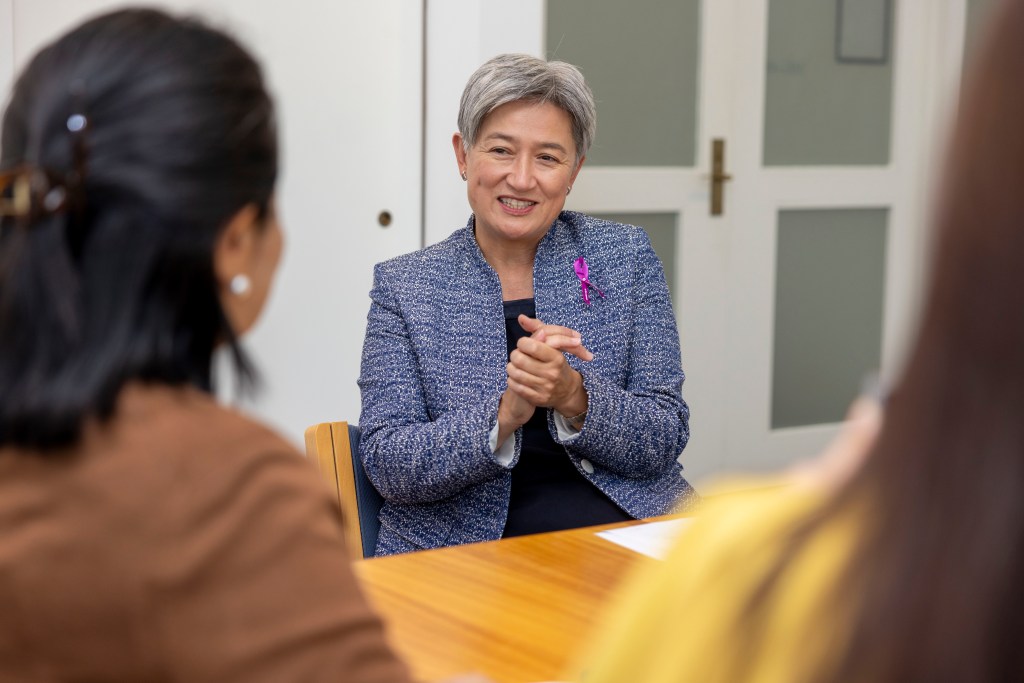
Asked what role she sees Australia playing in regional security, Wong characterised the country as a “middle power” that will “advocate for international rules and norms”.
“We want a region where sovereignty is respected… We want to make sure if there are disputes, that they don’t just depend on who’s more powerful – economically or strategically. That’s why we have been supporters of UNCLOS (UN Convention on the Law of the Sea) as the way in which these issues should be resolved.”
She added: “ASEAN centrality is not just an abstract concept for us, it is a reflection of our geography and strategic position… We want to work with ASEAN and the countries of ASEAN on the sort of region we want to live in.”
The ASEAN-Australia Special Summit is taking place in Melbourne from March 4-6.