

BANDAR SERI BEGAWAN – The Ministry of Education (MOE) will increase its budget for the third straight year after allocating $810.38 million for the 2024/25 fiscal year to develop “future-ready” learners and promote an “innovative education ecosystem”.
During her budget statement at the Legislative Council on Monday, education minister Datin Paduka Hjh Romaizah Hj Md Salleh said MOE’s budget for the upcoming year — a 4.6% rise from the previous year — will focus on enhancing students’ skills in navigating change.
She said it is important to foster future-ready learners who can contribute as active members of society in an ever-changing environment.
An initiative to achieve this aim involves strengthening the Science, Technology, Engineering, Art, and Mathematics (STEAM) Education and Skills Programme.
To create an innovative education ecosystem, the ministry will also improve digital infrastructure in education institutions, including setting up smart classrooms in 15 government primary and secondary schools as a pilot project.
She added that a centralised system known as the School Enterprise Resource Planning System will be developed for the management and monitoring of student information, teachers, and education institutions, and data analytics will be used to assist the ministry in formulating policies.
The initiatives are part of the ministry’s Digital Transformation Plan 2023-2027 to promote the use of digital technology in education.

Giving a breakdown of the education budget, the minister said $549.2 million (68%) has been earmarked for emoluments to pay 12,580 teaching and non-teaching staff.
A total of $221.9 million (27%) will be spent on recurring expenses and the remaining $39.3 million (5%) has been set aside for development projects.
Planned projects for the upcoming fiscal year include restructuring the Master of Teaching (MTeach) Programme at UBD’s Sultan Hassanal Bolkiah Institute of Education in order to align it with international standards.
A Competency Framework for Higher Education Leadership will also be developed as part of the Succession Planning Programme.
Religious education integration at special needs school
Following the government’s decision to integrate religious education in primary and special needs schools, Datin Dr Hjh Romaizah said they need to ensure students do not fall behind.
“A committee has been established to oversee this matter and focus on curriculum, scheduling, special educators and infrastructure, as well as resources,” she said.
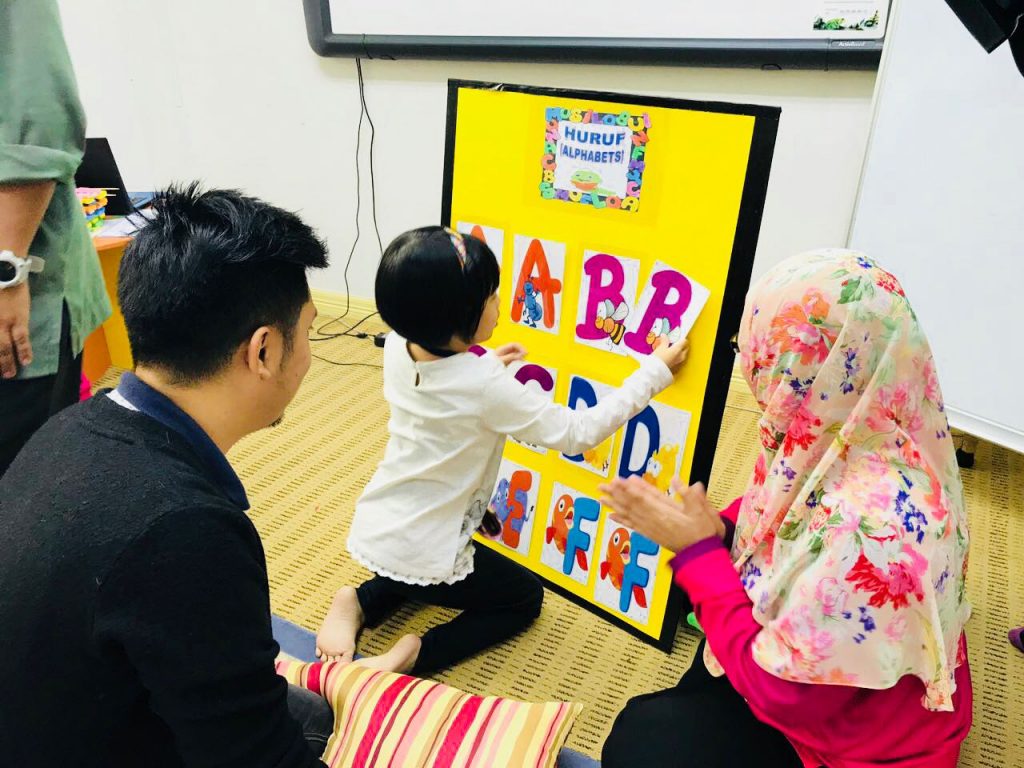
Brunei established its first special needs school, Sekolah Al-Ameerah Al-Hajjah Maryam, in January 2024.
The privately-operated school currently has 59 students, with priority admission given to students identified as Priority Levels 4 and 5 by the Department of Special Education.
The ministry will also provide a special needs education framework and curriculum for primary and secondary schools.
Employment rate of graduates improves
The minister said an increasing number of university graduates have managed to secure a job within six months of completing their studies, with the employment rate rising from 67% in 2021 to 76% in 2022.
The improvement was attributed to the collaboration between MOE, the Manpower and Planning Employment Council, and private sector to align programmes with local industry requirements.