
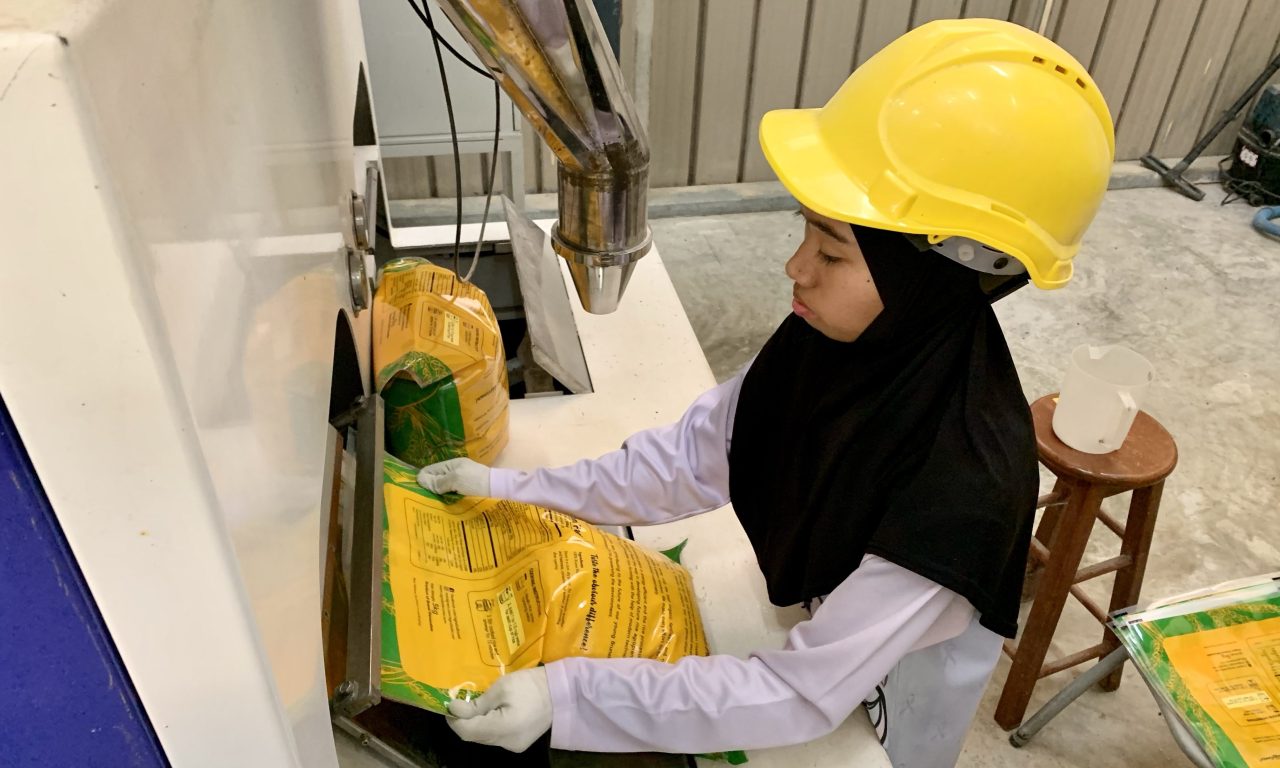
BANDAR SERI BEGAWAN – The Ministry of Primary Resources and Tourism (MPRT) has identified six key commodities — rice, chicken, eggs, beef, vegetables, and fish — as essential to strengthening Brunei’s food security and developing the nation’s food industry.
Speaking at the Legislative Council on Saturday, MPRT Minister Dato Dr Hj Abd Manaf Hj Metussin outlined efforts to boost the production of these commodities to reduce dependence on imports and ensure a reliable food supply during global crises.
Growth in local food production
Overall, the local food production has seen significant growth in recent years, with output increasing by 41%, rising from $525 million in 2017 to $742 million in 2024.
The minister reported that rice self-sufficiency currently stands at 8%, while eggs and chicken meat have surpassed local demand at 103% and 100%, respectively.
However, beef and buffalo meat remain low at approximately 2.3%. Tropical vegetables and fish production are at 72% and 74%, respectively.
Plans to boost rice production
Brunei’s rice self-sufficiency has increased from 4.8% in 2017 to 8% in 2024.
Dato Manaf expressed confidence that Brunei can reach self-sufficiency of 12% by promoting the cultivation of high-yield hybrid rice varieties such as Sembada 188 and Yuan 158.
He acknowledged key challenges, including limited agricultural land, acidic soil, unpredictable weather, and disease threats; but stressed the importance of a strategic, long-term approach to overcoming these issues.

Easing business regulations for agriculture and fisheries
To support small businesses in the fisheries and agriculture sectors, MPRT has introduced a number of initiatives to reduce startup costs and administrative burdens.
One major change is exemption from planning permission for the construction of greenhouses and nurseries.
For other agriculture-related buildings, pre-approved standard designs have been introduced for worker houses, pump houses, farm offices, and storage facilities.
Additionally, companies with fewer than 100 employees will be exempt from appointing a workplace safety and health officer.
For aquaculture businesses, MPRT has proposed standard scopes of work for environmental impact assessments (EIA), aiming to streamline the EIA process. New aquaculture sites in coastal and offshore areas will be exempt from conducting EIAs and environmental baseline studies.
Instead, operators will be required to submit a written notification alongside an environmental management and monitoring plan, which will be monitored by the Department of Environment, Park and Recreation.
“This change is expected to simplify the regulatory process while still ensuring environmental responsibility,” Dato Manaf added.
Last week, the minister proposed a budget allocation of $107.45 million for MPRT in the 2025/26 financial year.
This allocation includes $41.55 million for staff salaries, $29.13 million for recurring expenditure, and $36.77 million for development expenditure.