
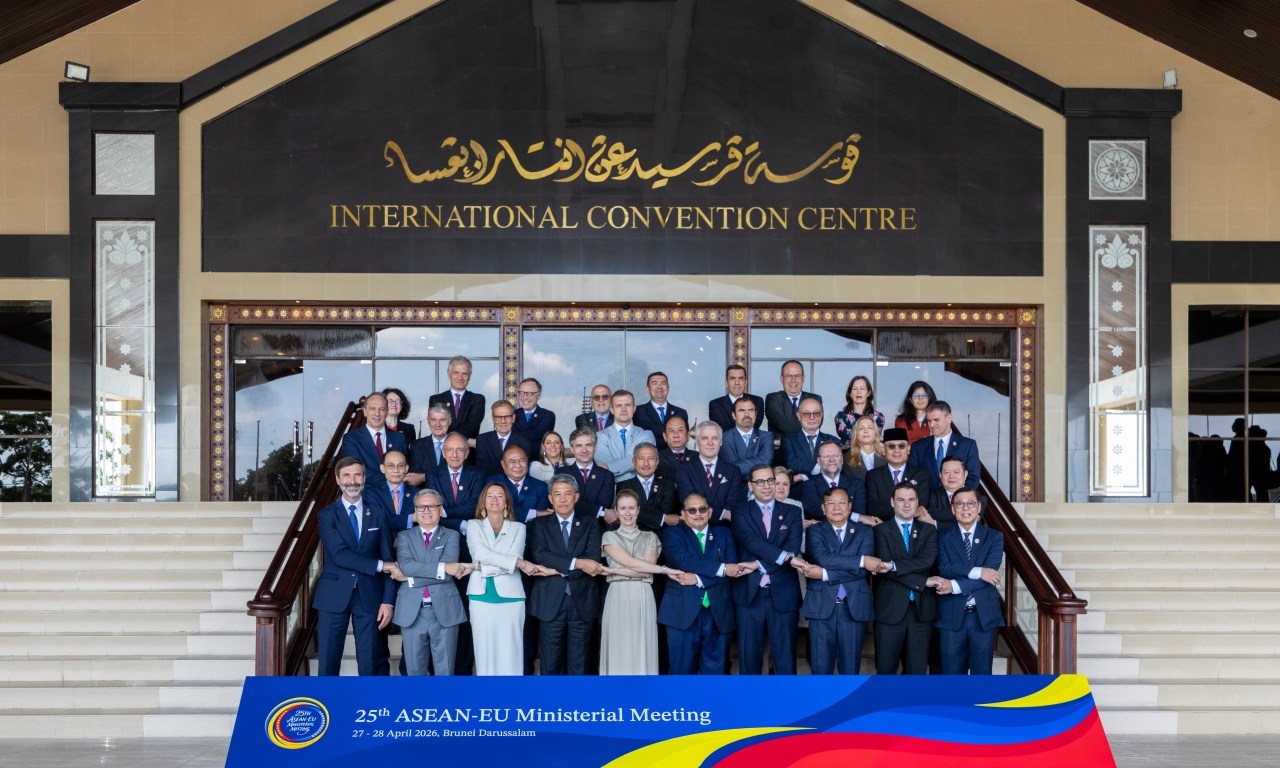
BANDAR SERI BEGAWAN – Diplomats from ASEAN and European Union countries affirmed their commitment to multilateralism and dialogue, as the Iran conflict and resulting energy crisis threaten to upend global stability.
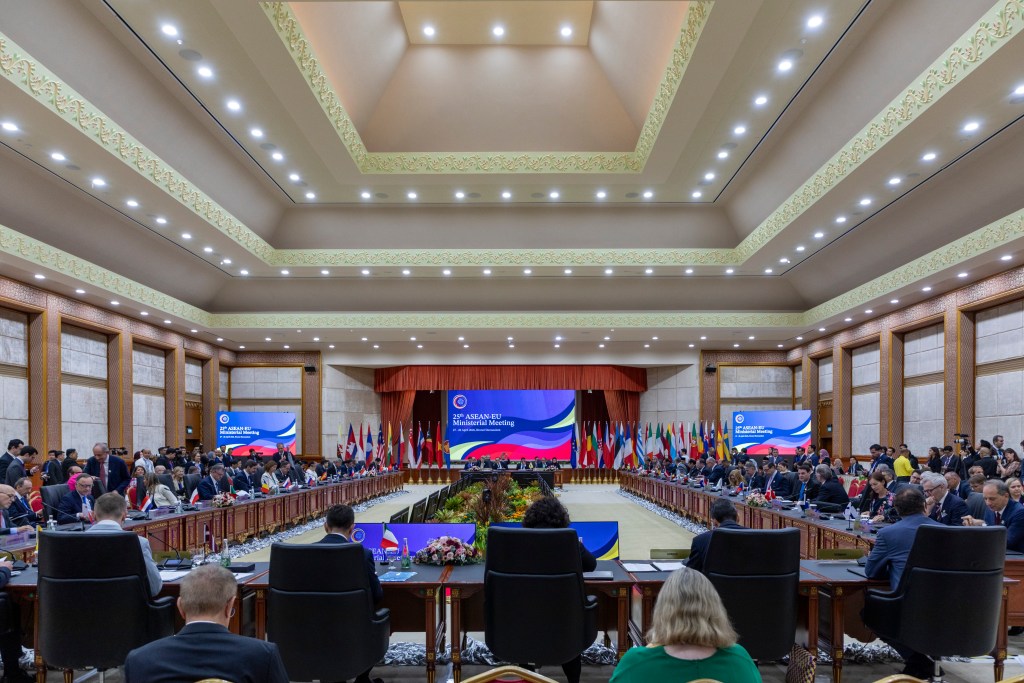
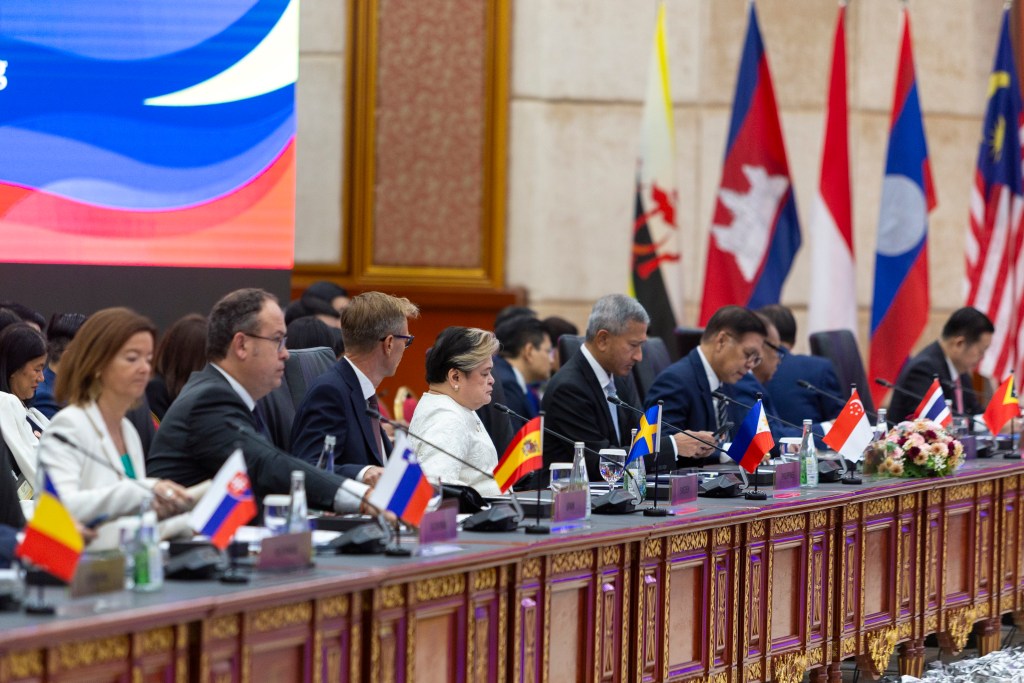
Meeting in Brunei on Tuesday for the 25th ASEAN-EU Ministerial Meeting, officials discussed closer security and energy cooperation as they navigate the fallout from war in the Middle East.
“Our relevance, be it together or separately, will be measured by our ability to uphold these principles consistently without discrimination and to translate them into concrete, result-oriented cooperation,” Brunei’s Second Minister of Foreign Affairs, Dato Erywan Yusof, said in his opening remarks.
Dato Erywan co-chaired the meeting alongside the EU High Representative for Foreign Affairs and Security Policy, Kaja Kallas. Brunei is the country coordinator for ASEAN-EU relations for 2024-2027.
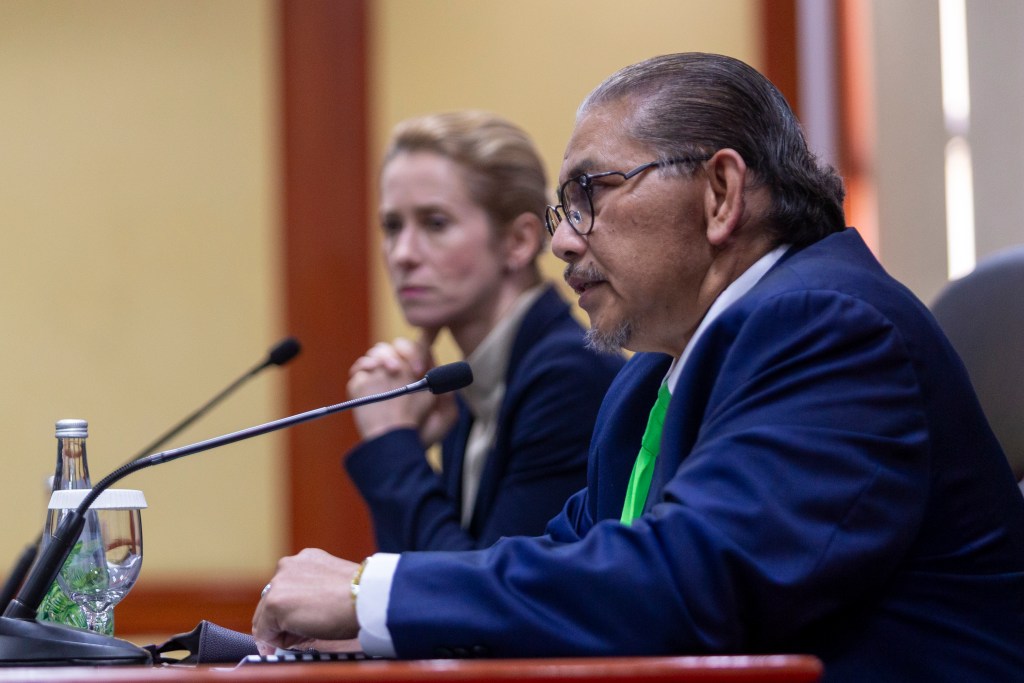
Kallas warned that the war had triggered a global energy crisis that will “affect all of us for years to come”, with Southeast Asian economies particularly vulnerable.
“The war is driving up energy, food, fertiliser and transport costs, fueling inflation, and slowing growth,” Kallas said in opening remarks at the forum.
“In a world defined by rising geopolitical competition, the EU and ASEAN cannot afford to drift apart. We must stand together in defence of the UN Charter, multilateralism, and the rules-based international order,” she said.
“Now more than ever, ASEAN and the EU have the responsibility and the capacity to act as anchors of stability and predictability.”
EU calls on Southeast Asia to turn away from Russian oil
While the joint statement produced at the conclusion of the meeting did not outline immediate actions to address global fuel shortages, Kallas said diversifying energy sources would leave countries less vulnerable to future shocks.
She also urged ASEAN countries to refrain from buying Russian oil as they try to cope with widespread fuel shortages caused by the Iran conflict.
“Unfortunately, this energy crisis is benefiting Russia… The oil revenue are the revenues Russia is using to fund this war [in Ukraine],” she said during a press conference. “Wars end when aggressors run out of money to finance them… That is also our message to our partners around the world who seek stability.”
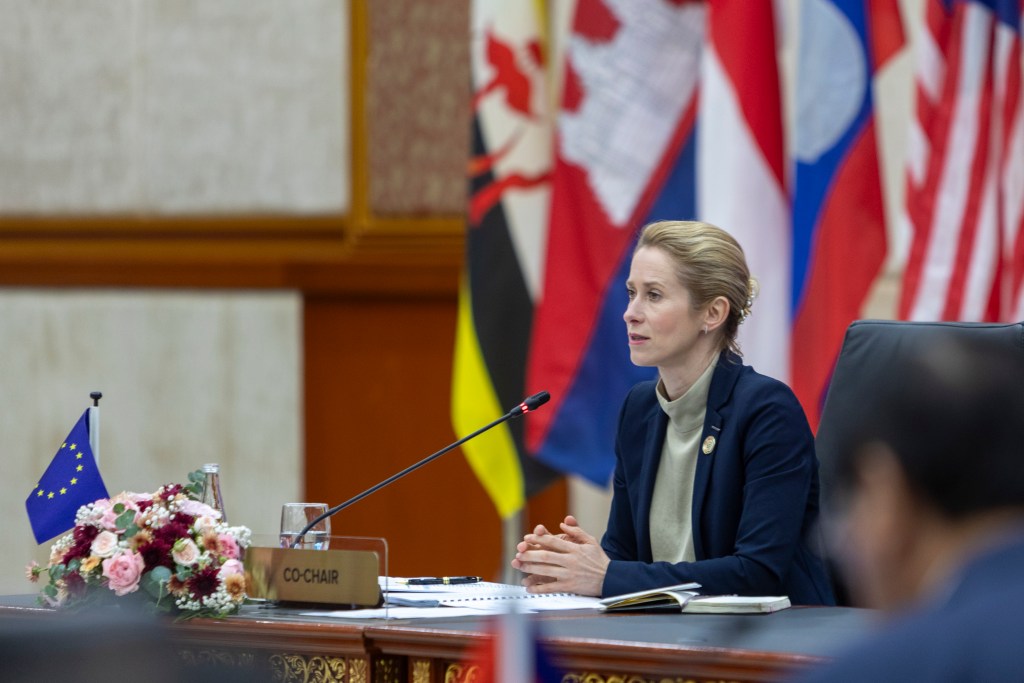
Kallas later added that the EU was seeking ASEAN’s cooperation on its sanctions against Russia, noting that the 27-nation bloc aims to target Russian oil revenues rather than individual countries or companies in Southeast Asia.
Path to a region-to-region FTA
Beyond the energy crisis, ASEAN and the EU voiced ambitions for a region-to-region free trade agreement (FTA), although no formal timeline was provided.
The EU already maintains FTAs with Singapore and Vietnam, and is pursuing similar bilateral deals with Indonesia, Malaysia, Thailand and the Philippines, as a “building block” towards a broader ASEAN-EU pact.

Brussels is also seeking to upgrade its relationship with ASEAN to a comprehensive strategic partnership, the highest level of formal cooperation between ASEAN and its external partners. While EU officials expressed hope an agreement would be finalised by 2027 — the 50th anniversary of dialogue relations — the ASEAN position remained more circumspect.
“Every member state in that meeting agreed that we want to move forward and we want to be ambitious,” Dato Erywan told reporters. “But I think from now until the 50th anniversary, our officials will have to work harder to translate those ambitions into practical and mutually beneficial outcomes.”
Singapore is slated to host a commemorative summit in 2027 to mark 50 years of ASEAN-EU relations.