

BANDAR SERI BEGAWAN – A Legislative Council (LegCo) member has highlighted the need for a comprehensive national framework on food security to increase food output and build a more holistic agricultural ecosystem in the country.
During a meeting of the Legislative Council on Tuesday, Lau How Teck expressed strong support for the government’s expansion of commercial rice farming in Kandol, Belait, which currently produces 2,088 metric tons of rice annually.
However, to ensure that the country achieves a higher rate of food security, Lau called for a deeper examination of the overall structure of the agricultural industry.
Brunei is heavily reliant on food imports, with more than 70% of the national food supply sourced from abroad.
Rice cultivation has seen mixed fortunes over the past 20 years, with farmers tackling problems such as high soil acidity and lack of irrigation infrastructure.
A national framework could involve conducting studies to identify new agricultural areas; improving irrigation systems; and providing incentives for private sector investment in local food production, he said.
Lau, who is the director of Hua Ho Agricultural Farms, was appointed to the Legislative Council in 2023 to represent agricultural and business interests.
The LegCo member suggested expanding collaboration with research institutions and the private sector to drive innovation in agriculture and food processing. He urged the government to encourage more investment in research to develop disease-resistant rice seeds, smart irrigation systems, and efficient food processing technologies.

Need for subsidies, capital to grow industry
Lau said farmers and MSMEs still face challenges in accessing capital, and proposed the establishment of a fund to provide subsidised loans with low interest rates.
This fund would support companies involved in developing agricultural technology, food processing, and digital trade, making it easier for entrepreneurs in these fields to innovate and expand their businesses.
“Although financing schemes from DARe exist, many entrepreneurs still face challenges in accessing capital under more flexible conditions,” he said.
Lau added that there was a need for a special programme to accelerate digital literacy for businesses in the agriculture and food sectors.
“The government could launch initiatives to help farmers and agri-entrepreneurs leverage e-commerce platforms and digital technology for marketing their products,” he said.
“This includes training in digital marketing, access to local and regional e-commerce platforms, and the integration of cashless payment systems to facilitate transactions.”
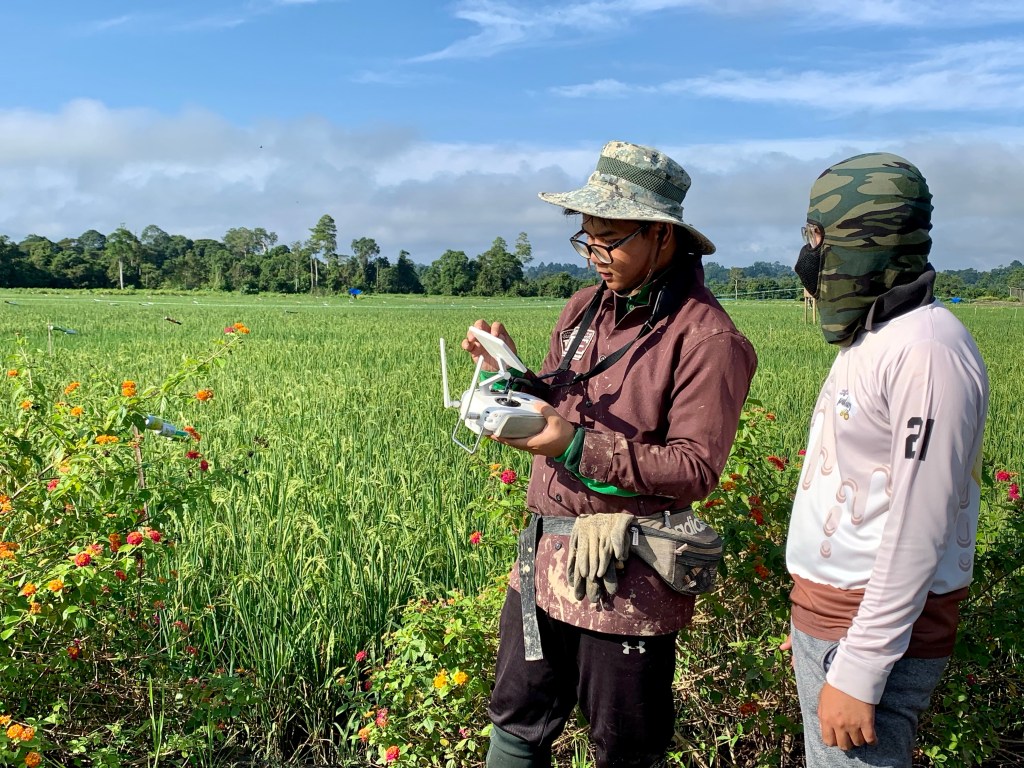
The LegCo member also proposed providing more incentives, so farmers will invest in new technologies such as farm automation, smart irrigation systems, drones for crop monitoring, and artificial intelligence for yield analysis.
All these innovations can contribute to improving the efficiency and sustainability of local farming practices, he said.
‘Strengthen food processing infrastructure’
Lau also proposed introducing a special fund to develop small and medium-scale food processing plants throughout the country.
“To add more value to local agricultural products, the food processing industry must be further strengthened,” he said.
“[The government] could provide grants to help local businesses achieve international halal certification and meet export standards, making it easier for local products to enter global markets.”
The LegCo member also recommended establishing a national agro-food hub as a “one-stop centre to support the entire agricultural and food industry value chain”.
“This one-stop centre could house agricultural research centres, food processing facilities, storage warehouses, and farmer entrepreneurship training centres,” he said.
“By consolidating these resources, the hub would streamline operations, create more job opportunities, and improve the efficiency of local operators.”