
BANDAR SERI BEGAWAN – Brunei has recorded its fastest annual gross domestic product (GDP) growth in 25 years, outperforming expectations with an expansion of 4.2% in 2024 despite ending the year with a quarterly contraction.
Buoyed by robust growth in the downstream oil and gas sector, the Brunei economy delivered its best performance since 1999 when real GDP grew 4.3%.
This also marks the second consecutive year of positive growth, following a 1.4% increase in 2023.
The Brunei economy had suffered a two-year recession from 2021 amid the COVID-19 pandemic, before rebounding in 2023.
In the annual GDP 2024 report released earlier this week, the Department of Economic Planning and Statistics (DEPS) said the oil and gas sector and non-oil and gas sector climbed 5.5% and 3.1% year-on-year, respectively.
The 2024 growth rate was better than expected as Brunei think tank Centre for Strategic and Policy Studies (CSPS) and the International Monetary Fund had projected a 2.7% and 2.4% rise in economic gains.
However, the higher GDP growth is not expected to significantly improve the government’s fiscal position as another widening budget deficit is on the cards for the upcoming 2025/26 financial year.
Second Minister of Finance and Economy Dato Dr Hj Mohd Amin Liew Abdullah previously said continued economic growth does not ensure fiscal sustainability in Brunei as tax revenue is not enough to cover government expenses.
The government’s fiscal position is still dependent on oil and gas prices despite a shift towards the non-hydrocarbon sector, CSPS said in its Brunei Economic Outlook 2024 report.
Citing IMF, the think tank said the oil and gas sector contributes 88% of Brunei’s fiscal revenues.
“It is imperative that the diversification strategy of the economy starts to impact the fiscal position,” it added.
The oil and gas sector has been the mainstay of the Brunei economy for over 90 years, but has been struggling with declining output in recent years as a result of ageing oil wells.
In the final quarter of 2024, real GDP dipped 1.1% year-on-year owing to the 5.2% decrease in the hydrocarbon sector.
Oil prices remain volatile, with the global benchmark Brent crude dropping to its lowest level of US$68.33 in three years amid decreasing global demand and uncertainty over US trade policy.
Non-oil and gas sector continues strong showing
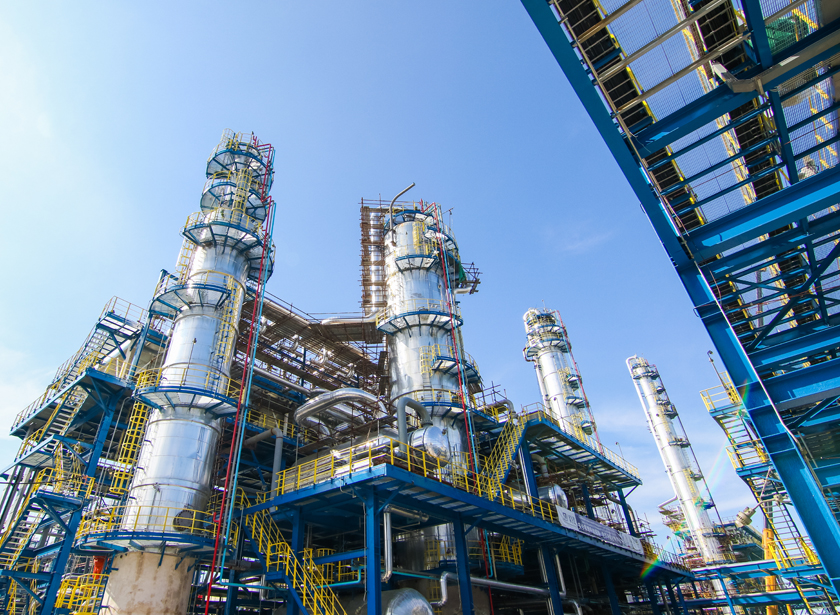
Downstream activities – categorised under the non-oil and gas sector – has been a key driver of Brunei’s economic growth since 2020 and is expected to continue its strong momentum this year.
DEPS attributed the manufacturing of petrochemical products as a major contributor of growth in the non-oil and gas sector after surging 12% last year.
Exports of petrochemical products have been consistently outpacing oil and gas exports over the past few years, making up 61% of total exports, according to CSPS.
The US$9 billion expansion of Pulau Muara Besar petrochemical complex is expected to further boost output and exports when it starts operations in 2029.
Since 2022, the production of urea fertiliser at Sungai Liang Industrial Park has also diversified Brunei’s exports beyond the upstream oil and gas sector.
Accounting for 53% of the GDP in 2024, the non-oil and gas sector’s growth was also fuelled by gains in the air transport (18.9%), water transport (7.7%), communication (6%), as well as wholesale and retail trade (4.3%) sub-sectors.
The ASEAN+3 Macroeconomic Research Office forecast that revenue in the non-oil and gas sector will grow 10.8% on average every year until 2028.
In contrast, the energy sector’s revenue share of GDP was predicted to shrink from 15.5% in 2023 to 12.6 percent in 2028.